Russian Strategic Aviation Exhausts Resources Due to Technological Limitations, Expert Says
Russia's military-industrial complex is unable to fully restore its fleet of strategic bombers and other combat aircraft due to the loss of Soviet technologies.
 🚨Events
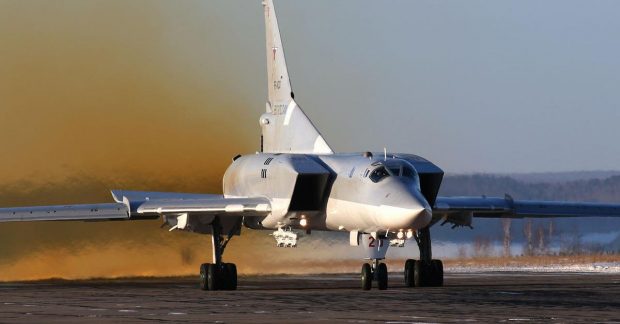
Photo: UNIAN
Key points
- Loss of Soviet technological cycles slows down Russian aviation industry
- Issues with manufacturing and repairing engines for strategic bombers
- Limited remaining operational aircraft restrict massive missile strike capabilities
The Russian Federation is facing a deep crisis in military aviation, as the restoration of serial production for combat aircraft and their engines is hampered by a lack of technology and industrial capacity. According to Anatolii Khrapchynskyi, a defense enterprise development director and reserve officer of the Ukrainian Air Forces, Soviet long-range aviation relied on broad industrial cooperation, whereas modern Russia is forced to rely heavily on stockpiles and the cannibalization of old equipment.
Technological Gap and Engine Manufacturing Issues
A major obstacle for the Russian aerospace industry is the inability to replicate complex components, such as NK-12MP turboprop engines for Tu-95MS bombers or NK-25 engines for Tu-22M3s. The expert emphasizes that welding titanium center-wing spars or producing reliable powerplants now exceeds the capabilities of Russian factories, which are struggling with high defect rates. Intensive use of existing airframes for missile strikes burns through their operational lifespan much faster than peacetime regulations allow.
In addition to manufacturing challenges, repair logistics have suffered significant setbacks following damage to facilities in Taganrog. This severely complicates the maintenance of long-range aviation and airborne warning aircraft, while Western sanctions have effectively halted projects like the A-100 due to a lack of imported microelectronics.
“All of their 'strategic greatness' today rests on warehouse leftovers and the cannibalization of old airframes,” notes Anatolii Khrapchynskyi.
The overall number of combat-ready missile carriers remains strictly limited, forcing the enemy to preserve its equipment. Maintaining this fleet requires constant patchwork repairs using parts from other grounded planes, suggesting that the mathematics of war is gradually depleting Russia's aviation sector.
Source UNIAN — unian.ua/weapons/rosiya-maye-obmezheni-mozhlivosti-vidnovlyuvati-st… ↗
Read next
 🧠AI Analysis
Slavuta District Crash That Killed Five: Driver Sentenced to Eight Years
A court has sentenced the driver responsible for a devastating July 2023 traffic collision in the Khmelnytskyi region that claimed the lives of five people, including two…
 🛡️Security
Jet-powered 'Geran' drones: Experts evaluate new infrastructure threat
Russian forces have begun deploying new modifications of jet-powered drones, which feature significantly higher speeds and destructive power compared to traditional 'Shah…
 🚨Events
Finland Considers Fortifying Border with Russia Drawing on Ukrainian Experience
Finnish lawmakers are discussing the construction of anti-tank barriers and fortifications along the Russian border during peacetime, inspired by lessons learned from the…
 🚨Events
Rescuers in Dimer pulled 79-year-old woman from rubble
In Dimer, Kyiv region, rescuers continue to rescue people after a Russian attack. Among those rescued is a 79-year-old woman.
 🛡️Security
Power restored in Rivne region following Russian attack
Electricity supply has been fully restored in the Sarny district of the Rivne region after a Russian strike caused widespread outages on November 20.
 🛡️Security
89-year-old woman rescued from rubble in Dymer after drone strike
Rescuers continue search operations in Dymer following a Russian drone attack. The death toll from the residential building strike has risen to nine.